
The Reality: Most Billing Models Become Hybrid
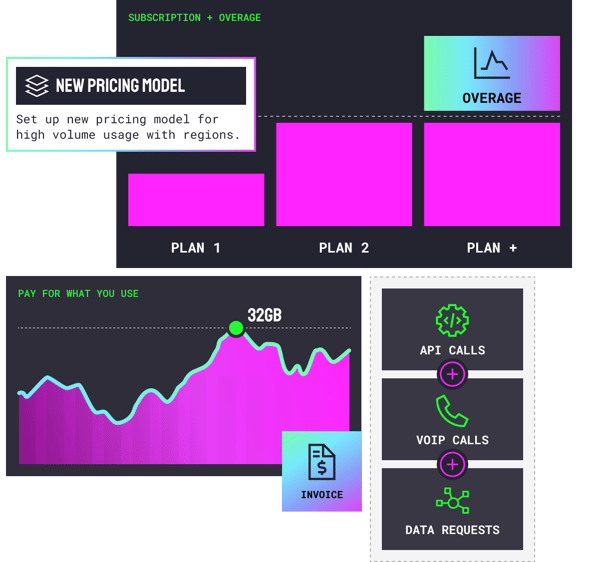
As products mature and customer needs diversify, monetization evolves into combinations of recurring, usage-based, and contract-driven pricing models.
Subscription models expand to include usage allowances, overages, commitments, and multi-service bundles that must all work together accurately.
Common patterns include:
-
Subscriptions with usage overages
-
Tiered plans with consumption thresholds
-
Committed spend with true-ups
-
Bundles combining recurring, usage, and one-time charges
-
Add-ons, implementation fees, and service charges
-
Multi-product contracts with different billing rules
Hybrid billing is where growth happens. It is also where legacy billing systems start to break.

Why Hybrid Billing Is Hard to Get Right
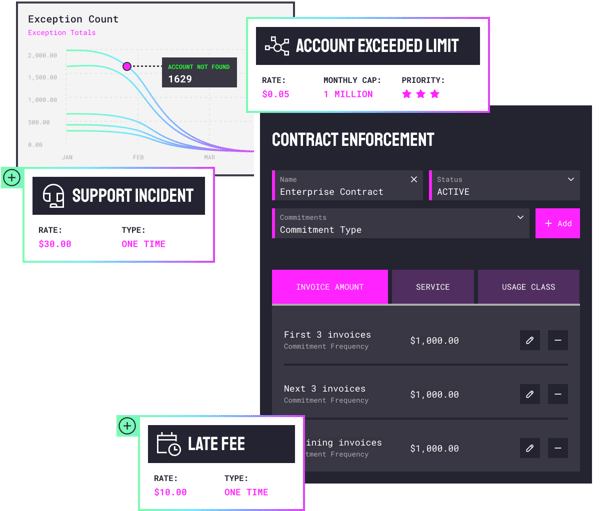
Common failure points include:
-
Disconnected engines for subscription and usage billing
-
Inconsistent application of contract terms across products and services
-
Revenue leakage caused by rating errors, misapplied pricing, or billing exceptions
-
Manual reconciliation between usage records, billing systems, and financial systems
-
Slow rollout of new pricing models because every change requires custom development
-
Customer disputes driven by unclear or unpredictable invoices
-
Inability to manage usage buckets, allowances, and overage logic consistently
The result is a billing operation that becomes reactive and fragile as the business scales.
What Enterprise-Grade Hybrid Billing Requires
Knowing how well our teams have leveraged LogiSense's services in other lines of business, it was an easy decision to quickly implement their billing system during this period of urgent demand.
Leader, Software Engineering, Cisco

How LogiSense Enables Hybrid Billing
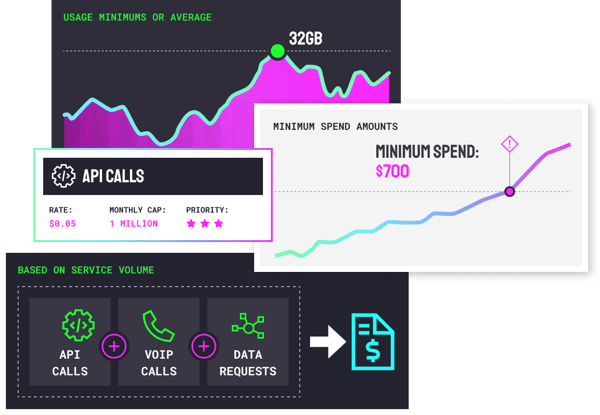
LogiSense provides a unified foundation for hybrid monetization so you can scale complex pricing without creating operational bottlenecks.
-
Launch new pricing models faster - Support evolving monetization strategies, including hybrid subscription and usage models, without rebuilding your billing stack or maintaining fragile integrations.
-
Reduce revenue risk and operational overhead - Minimize manual adjustments, billing exceptions, disputes, and reconciliation effort that lead to leakage and inefficiency.
-
Support complex hybrid models with confidence - Operate subscriptions, usage-based pricing, commitments, pooled usage, and multi-service bundles within a single platform.
-
Align teams around one source of truth - Give Product, Finance, and IT shared confidence in usage processing, pricing logic, billing execution, and reporting outcomes, with full traceability across systems.
Designed for Complexity Without Risk
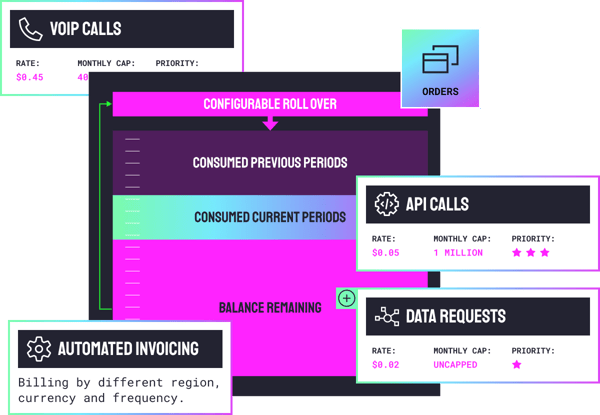
This is for organizations where:
-
Monetization combines subscription, usage, and contract-driven pricing
-
Customer relationships involve complex hierarchies and shared usage models
-
Pricing is evolving rapidly and must be supported without operational disruption
-
Systems must scale without sacrificing accuracy, control, or transparency
Hybrid billing is a trust conversation. Buyers need confidence that the platform can handle complexity without introducing risk.
LogiSense is built for enterprise environments where hybrid billing must be accurate, scalable, and auditable.
Trusted by leading companies











Cisco Replaces Zuora With LogiSense

Challenges of usage-based pricing and how to overcome them

Let's talk
- Find out where revenue is leaking and what it's costing you
- See how other operators have closed the gap without rebuilding their stack
- Understand what it would take to enforce every contract with confidence
- Get an honest assessment of whether LogiSense is the right fit