
AI enables businesses to analyze customer behavior, consumption patterns, and market data to inform pricing decisions. Instead of relying exclusively on fixed subscriptions or per-user fees, SaaS companies can explore more flexible pricing structures that respond to actual product usage and customer requirements.
webinar
How is AI Transforming Pricing Strategies
From Subscription Pricing to AI-Driven Monetization
In this episode of the LogiSense Podcast, Tim Neil sits down with pricing and finance strategy expert Niyati Shah to explore how AI is transforming pricing strategies across industries. They discuss the challenges and opportunities of AI-driven monetization, from dynamic pricing models to token-based consumption and hybrid revenue strategies.
Whether you're navigating the shift from subscriptions to AI-enhanced pricing or seeking insights on investor expectations, this conversation offers invaluable takeaways for B2B leaders looking to optimize revenue in the age of AI.
What you'll learn:
- AI is Disrupting Pricing Models - Companies are leveraging AI to optimize pricing strategies, moving from traditional models (e.g., subscriptions, per-user fees) to more dynamic and predictive pricing structures, such as usage-based or tokenized models.
- Hybrid Monetization Strategies Are Gaining Traction - Businesses are experimenting with a mix of subscription and consumption-based pricing to balance revenue predictability with flexibility. Investors are particularly focused on how AI monetization strategies impact long-term financial stability.
- Data-Driven Decision Making is Critical - AI enables deeper insights into customer behavior, helping businesses optimize renewal strategies, upsell opportunities, and product development. Companies must integrate their financial and CRM systems to extract meaningful, real-time data.
- Dynamic and Personalized Pricing is the Future - AI-powered pricing strategies are shifting towards personalized and flexible models that adapt based on customer usage, market conditions, and business needs. This trend, already common in B2C (e.g., Uber, airlines), is expanding into B2B SaaS.
Continue learning
Usage Economy Summit
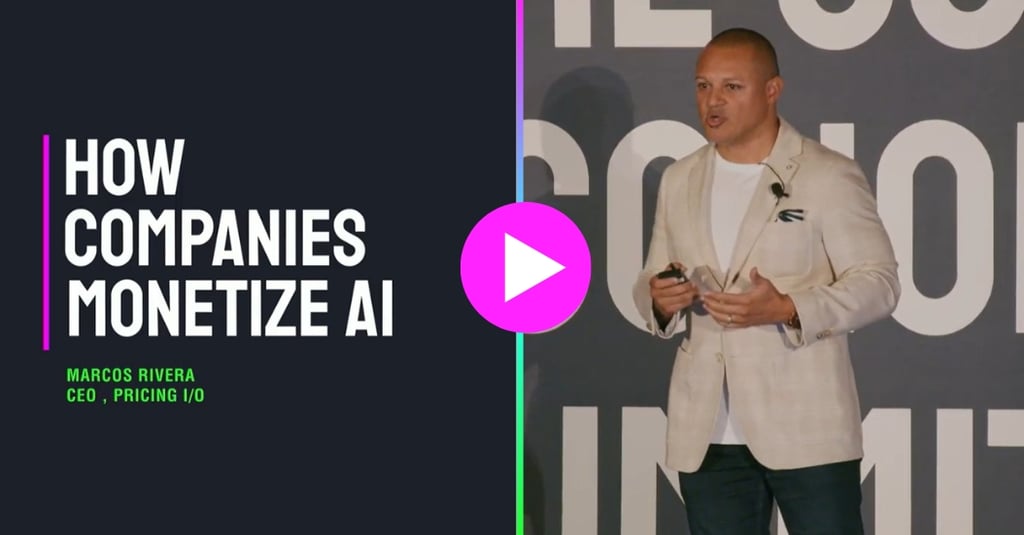
How Companies are Monetizing AI Today
Marcos Rivera’s REAL framework helps teams anchor pricing to revenue impact, competitive speed, risk avoidance, and faster time to value so they can capture the full business outcome AI delivers.
Speak with an Expert
Turn AI Consumption into Revenue
Speak with a LogiSense expert to explore how flexible billing can support your AI monetization strategy.
FAQ
How is AI transforming pricing strategies for B2B SaaS companies?
What is the difference between AI-driven pricing and AI usage-based pricing?
AI-driven pricing uses artificial intelligence and data analytics to inform or optimize pricing decisions. AI usage-based pricing is a monetization model in which customers are charged according to their consumption of AI services, such as tokens, API requests, or processing activity. Companies can use either approach independently or combine them.
Why are hybrid pricing models becoming important for AI-powered SaaS?
Hybrid pricing models combine predictable recurring fees with variable consumption charges. This allows businesses to maintain a stable revenue foundation while accommodating customers with different usage requirements. For AI-powered SaaS businesses, hybrid models can also help balance changing infrastructure costs with customer demand.
How does AI influence SaaS revenue forecasting?
AI can support revenue forecasting by analyzing historical transactions, customer behavior, usage trends, and renewal patterns. These insights can help finance teams identify potential changes in revenue, anticipate demand, and evaluate the financial implications of different pricing models.